How Industrial Oil Purification Systems Increase Equipment Life in Plants

Team Minimac
Jul 30, 2025 · 5 min read


What is the impact of oil purification on industrial equipment life?
The Fast Answer: Implementing advanced oil purification systems reduces internal mechanical wear by up to 80%, extending industrial equipment life by 2x to 4x. By continuously removing submicron particulate matter, emulsified moisture, and oxidative varnish, these systems prevent catastrophic component failure in hydraulic systems, turbines, power substations, and heavy gearboxes. This shifts maintenance from a reactive operational expense into a measurable, long-term asset reliability investment.
The True Cost of Industrial Oil Contamination
Walk into any high-velocity industrial plant after an unexpected breakdown, and you will find an identical atmosphere of high pressure. Production teams wait idly for restart clearance, maintenance engineers troubleshoot complex subsystems under extreme time constraints, plant managers calculate downtime losses by the minute, and reliability teams scramble to analyse the root cause.
In a significant majority of these cases, the failure is not born from a sudden, catastrophic mechanical fault. It develops much earlier, moving far more quietly and invisibly through the system: contaminated oil.
Across heavy industrial sectors, including steel mills, cement manufacturing facilities, power stations, marine vessels, and petrochemical operations within the GCC region, lubricant contamination remains the single greatest hidden threat to asset integrity. Fine particulate matter, moisture ingress, atmospheric dust, process chemical soot, and microscopic metallic wear fragments slowly degrade the internal surfaces of machinery. This degradation compromises hydraulic systems, rolling-element bearings, high-speed turbines, compressors, and industrial gearboxes long before an initial automated control panel alarm is triggered.
[Contamination Ingress] ──> Micro-Abrasive Wear ──> Component Efficiency Drop ──> Catastrophic Failure
When industrial facilities implement proactive oil contamination control and modern oil purification systems, they are not simply checking an everyday maintenance box. They are executing a strategic, data-backed asset protection plan. Keeping lubrication networks flawlessly clean ensures that production machinery operates with maximum stability, equipment life is dramatically extended, and maintenance personnel shift from a costly reactive posture to a controlled, predictive workflow.
Why Fluid Contamination Destroys Machinery from the Inside Out
Industrial equipment components rarely fail overnight without warning. Instead, they suffer from mechanical degradation that develops progressively over hundreds of operating hours.
Consider a typical hydraulic reservoir or industrial gearbox: a minimal fraction of moisture enters through an absolute headspace breather. Microscopic airborne dust bypasses basic sealing during a routine maintenance check. Natural thermal cycles trigger fluid oxidation, forming sticky chemical chains of sludge and varnish inside critical hydraulic lines. As these elements interact, fine metal-to-metal wear particles begin circulating directly through high-pressure pumps and precision bearings. Over time, system operating temperatures rise, volumetric efficiency drops, and core mechanical components wear down far faster than their engineered lifespan intends.
Major Operational Disruptions Caused by Poor Contamination Control:
- Unplanned Plant Downtime: Halting primary assembly lines, kiln rotations, or rolling mills, leading to thousands of dollars in lost hourly output.
- Hydraulic System & Precision Servo Valve Failures: Silt-sized particulate buildup causes friction locking, disrupting fluid dynamics and positioning accuracy.
- Premature Bearing Fatigue: Micro-spalling and abrasive pitting on bearing raceways, requiring emergency rebuilds.
- Compromised Fluid Lifespan: Rapid depletion of vital additive packages (anti-wear agents, rust inhibitors, and antioxidants), requiring frequent oil changes.
- Soaring Operational Maintenance Costs: Increased consumption of replacement elements, high-volume waste oil disposal charges, and extensive emergency labour hours.
According to global tribology benchmarks published by organizations like Noria and Reliabilityweb, up to 80% of all mechanical failures across hydraulic and lubrication circuits are directly caused by fluid contamination. In severe, high-dust operating environments, such as regional cement operations, mining sites, marine engine rooms, and metallurgical foundries, the destructive impact of these unmanaged particles escalates exponentially.
Comparing Modern Industrial Oil Purification Technologies
Many plants still rely exclusively on standard, inline full-flow filters, operating under the dangerous assumption that their mechanical lubrication systems are fully insulated from danger. In reality, conventional inline media is engineered strictly to trap larger, macro-sized particles to prevent catastrophic jams. They are entirely incapable of removing dissolved moisture, chemical varnish, sub-micron silt, and suspended atmospheric gases that continuously cycle through high-pressure circuits.
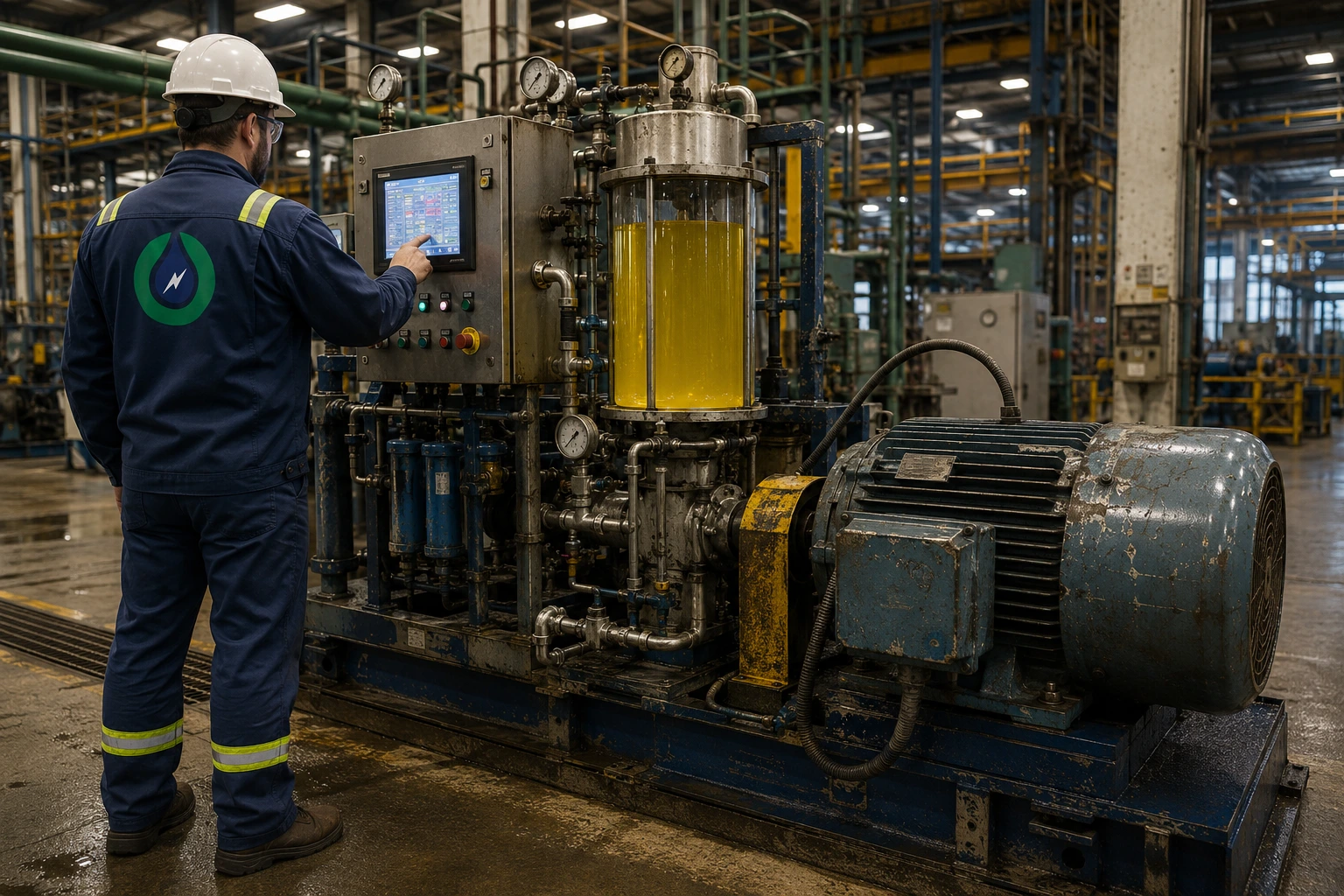
Modern industrial oil purification machines are built to operate as an offline bypass or continuous kidney loop. They scrub, dry, and recondition industrial lubricants while the host machinery remains fully online and productive.
The table below outlines the primary industrial purification methodologies used to maintain elite lubricant cleanliness:
| Purification Technology | Primary Contaminants Targeted & Removed | Optimal Industrial Application & Assets |
|---|---|---|
| Vacuum Dehydration Systems | Free, emulsified, and dissolved water; entrained air; volatile gases | Steam/Gas Turbines, Large Compressors, Marine Hydraulics |
| Electrostatic Oil Cleaners | Sub-micron particulate matter, soft carbon soot, varnish precursors, and sludge | High-precision CNC Servo Systems, Plastic Injection Molding |
| Centrifugal Filtration Units | High-density solid wear debris, heavy free-water ingress | Heavy Marine Crosshead Engines, Steel Rolling Mills, Mining Gearboxes |
| Offline Kidney Loop Systems | Fine abrasive dust, particulate silt down to 1–3 microns | Main Hydraulic Fluid Reservoirs, Bulk Oil Storage Systems |
Core Focus Areas for High-Stress Industrial Environments:
1. Moisture: The Silent Destroyer of Film Strength
In high-humidity, high-temperature locations like the GCC region, water ingress into oil reservoirs is a continuous operational challenge. Moisture gains access through worn seals, tank breathers, and cooler tube leaks.
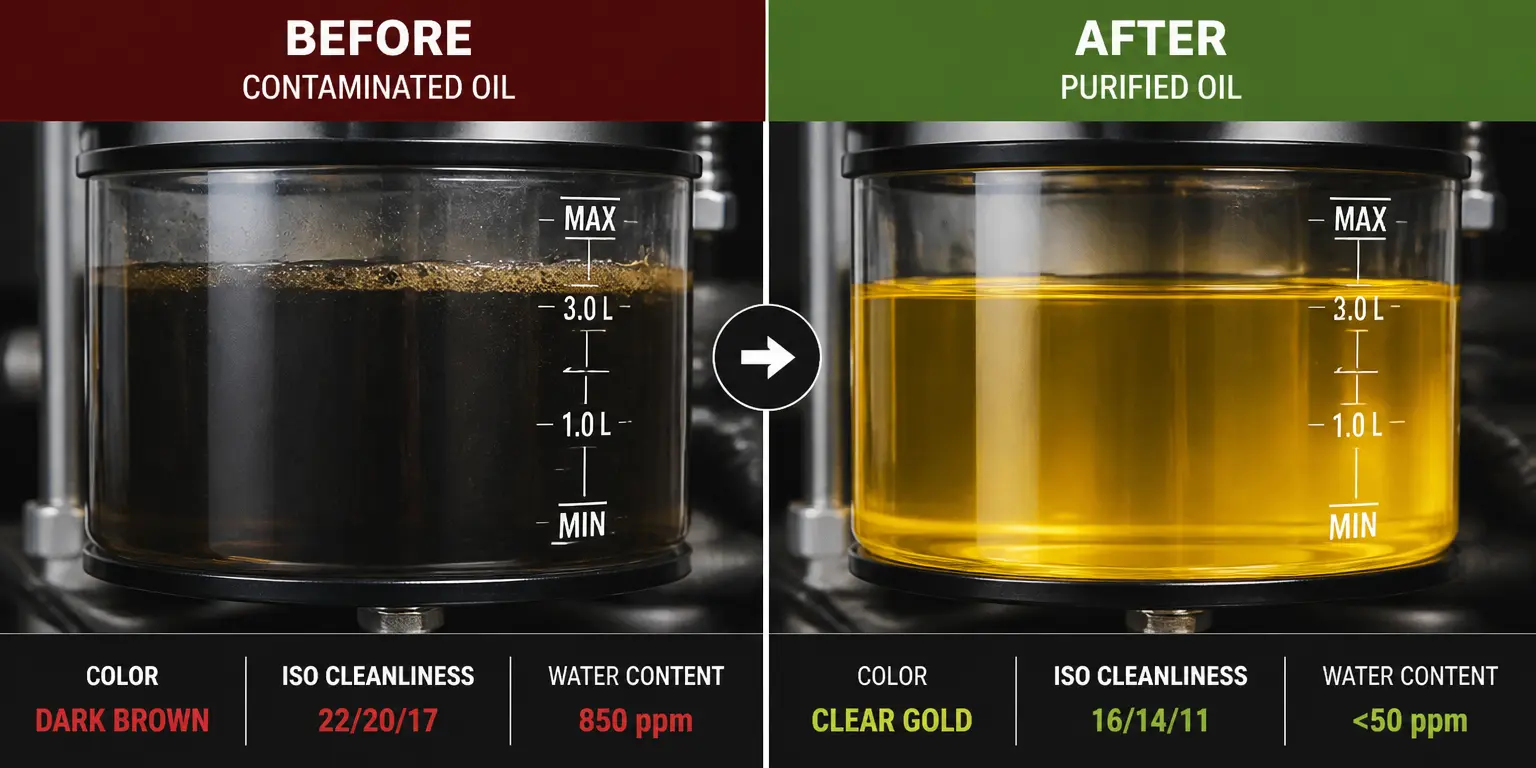
When water mixes with oil, it behaves like an industrial solvent rather than a lubricant. Even a minor moisture concentration of 500 ppm (parts per million) can slash the operating lifespan of a rolling-element bearing by over 50%. Water induces rapid chemical oxidation of the base oil, completely strips away zinc-based anti-wear additives, triggers localized component corrosion, and drastically reduces the oil film's load-bearing thickness. This leads to severe metal-to-metal contact and cavitation.
Deploying high-efficiency vacuum dehydration systems for industrial lubricants allows plants to distill out free, emulsified, and dissolved water under a deep vacuum. This process protects the lubricant's underlying molecular integrity while lowering water content back down below 100 ppm.
[Moisture Ingress] ──> Additive Depletion ──> Base Oil Oxidation ──> Bearing Micro-Spalling
2. High-Voltage Infrastructure Protection: Transformer Oil Purification Units
Power reliability serves as the foundation for modern industrial operations, especially within energy-intensive manufacturing zones across the UAE and broader Middle East. Large-scale step-down and distribution transformers are foundational assets. If a major transformer fails due to insulation breakdown, it can trigger widespread facility blackouts, millions of dollars in secondary production losses, and profound safety hazards.
Transformer oil deteriorates steadily under the combined stresses of high electrical voltage, operational heat, and ambient oxygen. This degradation creates dissolved gases, moisture pockets, and conductive carbon sludge. Integrating a specialized, multi-stage transformer oil purification unit acts as a strategic asset-protection shield. These specialized units use deep vacuum thermal filtration to extract moisture, degas the fluid, and remove particulate matter. This process completely restores the oil's dielectric breakdown voltage and long-term cooling efficiency.
Lubrication Excellence as a Modern Sustainability Strategy
In today's industrial landscape, plant maintenance metrics are no longer judged solely on raw equipment uptime. Modern corporate initiatives demand that industrial operations actively reduce their environmental footprints, limit carbon outputs, and practise circular resource management.
Advanced oil contamination control and purification line up perfectly with these dual corporate mandates.
[Clean Oil Program] ──> 300% Fluid Life Extension ──> Decreased Waste Oil Generation ──> Reduced Carbon Footprint
When an industrial facility transitions away from basic schedule-based oil dumping and instead embraces condition-based oil purification, the environmental and financial paybacks are substantial:
- Drastic Reduction in Fluid Consumption: By continuously removing contaminants, the base oil molecules and additive structures do not break down. This allows plants to safely extend oil drain intervals by 3x to 5x, saving thousands of gallons of new oil purchases annually.
- Minimizing Hazardous Waste Streams: Less oil consumed means a corresponding decrease in the volume of hazardous industrial waste oil generated, stored, and transported for disposal or incineration.
- Optimizing Thermodynamic Energy Efficiency: Fluid completely free of sludge, particulate friction, and varnish build-up exhibits stable fluid dynamics. This reduces internal mechanical friction, leading to measurable drops in electric motor power consumption across massive hydraulic pumps and gear drives.
Conclusion: Turning Clean Oil Into a Strategic Operational Asset
Contamination-driven mechanical failures rarely receive executive visibility until catastrophic downtime severely compromises a facility's monthly production targets. By the time an engineer replaces a seized pump or a scored turbine bearing, the true financial damage, combining expensive replacement parts, rush freight, emergency technician labour, and lost manufacturing output, has already hit the bottom line.
The industrial facilities that consistently lead their sectors in low total cost of ownership (TCO) and high operational efficiency are those that view lubrication dynamically. They recognize that oil is not an inexpensive consumable to be neglected until it turns black; it is the vital lifeblood of their rotating infrastructure.
By integrating dedicated industrial oil purification units, executing routine oil analysis, and prioritising proactive contamination control, modern plants turn clean oil into an active line of defence. This approach guarantees that critical machinery runs cleaner, operates cooler, and lasts significantly longer.
Learn more about our solutions and connect with Minimac Systems on LinkedIn.
About the Author
This article was written by an industrial lubrication and reliability specialist at Minimac Systems with extensive experience in oil purification systems, contamination control, hydraulic reliability, and predictive maintenance practices. With hands-on exposure across power plants, steel industries, cement facilities, marine operations, and heavy manufacturing sectors, the author shares practical insights focused on improving equipment life, reducing downtime, and enhancing industrial operational reliability.
FAQs
Share this on
 Email
us
Email
us