Unlock Optimal Performance by Elevating with our specially designed FRF Conditioning Systems!
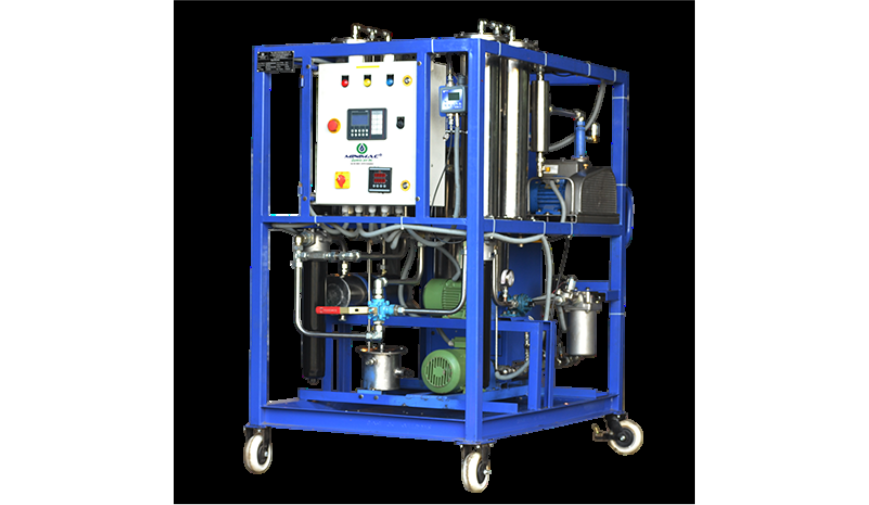
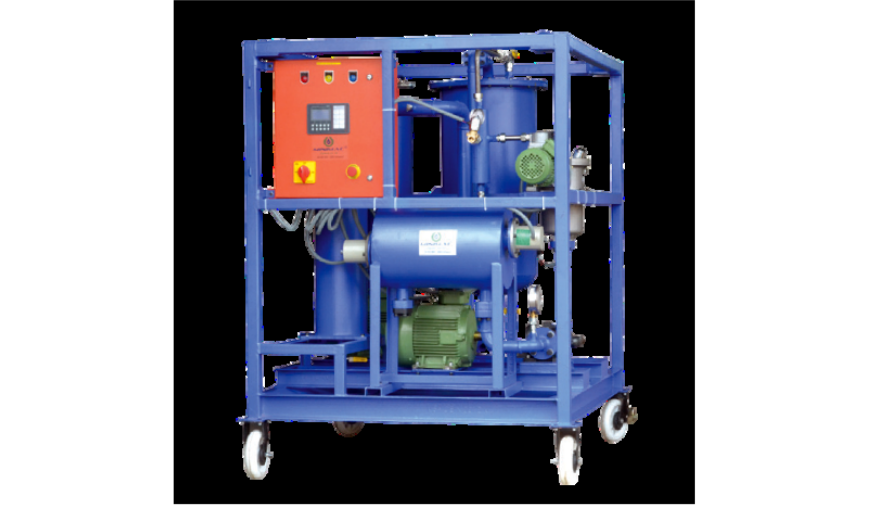
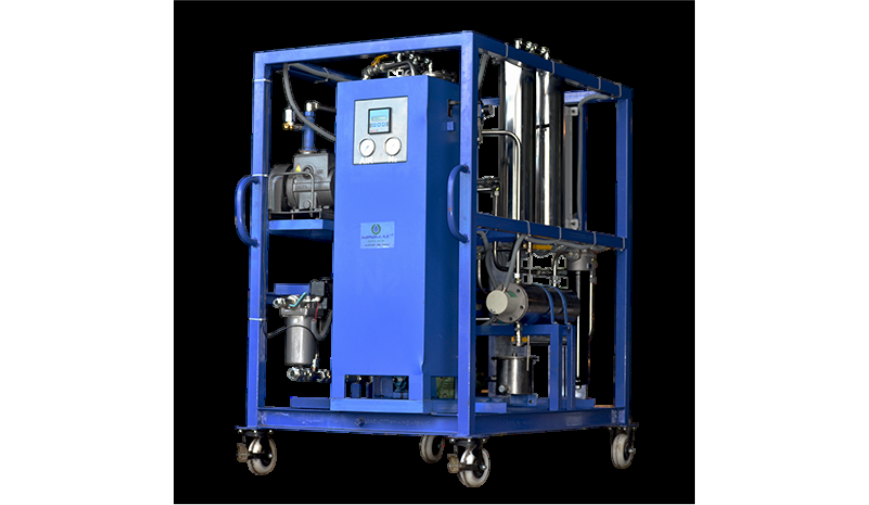
In modern heavy industries, where operational uptime, equipment reliability, and environmental compliance are critical, fluid contamination is one of the leading causes of system failure. The FRF Conditioning System is engineered to eliminate moisture, acids, and solid contaminants from industrial lubricants and hydraulic fluids, restoring them to optimal operating condition.
The MLC-TRIX Series represents an advanced generation of industrial fluid conditioning technology. Designed with four-stage purification, ion-exchange TAN reduction, and nitrogen blanketing, this system ensures that lubricants remain chemically stable, clean, and moisture-free even in demanding environments such as coastal plants, high-humidity facilities, and high-temperature processing units.
The above-mentioned product is GreenPro certified. GreenPro is a Type–1 Ecolabel which is accredited by the Global Ecolabelling Network.
Certified for sustainability, this product proudly carries the prestigious GreenPro Certification [GPMSP338002] , ensuring eco-friendly excellence.
An FRF Conditioning System is a specialized purification and stabilization unit developed to maintain the quality of fire-resistant fluids, electro-hydraulic oils, and industrial lubricants. Unlike conventional filtration systems that remove only particles, this system targets three major contamination threats simultaneously:
 Moisture contamination Solid particulate contamination Acid contamination (TAN increase)
By controlling all three, the system prevents oxidation, corrosion, sludge formation, and component failure.
Advanced four-stage conditioning technology Built-in TAN reduction system Nitrogen blanketing contamination prevention Continuous 24/7 operating capability High-efficiency moisture removal Rugged industrial design for harsh environments Automated controls for easy operation Energy-efficient performance Fire-resistant fluids Hydraulic oil Lubricating oil Gear oil Turbine control oilViscosity Range: 0–100 CST (higher viscosity models available on request)
Power plants (coal, gas, hydro, nuclear, wind, biomass) Oil and gas processing facilities Steel and rolling mills Cement and construction material plants Mining and mineral processing operations Pulp and paper industries Automotive manufacturing plants Marine and offshore installations Heavy engineering and fabrication units Prevents equipment failure caused by contaminated oil Extends lubricant service life Reduces maintenance frequency Improves machine efficiency TAN value ≤ 0.15 mg KOH/gm Solid contaminants ≤ NAS 5 Moisture removal up to 300 PPM Removes dissolved, emulsified, and free water Filtration capacity up to NAS 4–5 Lower oil replacement costs Reduced downtime losses Longer component lifespan Improved production reliability Prevents valve sticking and plugging Eliminates sludge and oxidation deposits Protects pumps from micron-level particles Maintains oil properties such as viscosity, flashpoint, and additive balanceWhen selecting an FRF Conditioning System, evaluate the following factors:
Ensure suitability for the oils used in your operations.
Choose the cleanliness level required for your machinery.
Consider temperature, humidity, and contamination risks.
Confirm ease of servicing and operational simplicity.
Match throughput with oil volume and contamination load.
Assess long-term savings rather than just initial investment.
Selecting the correct system ensures optimal performance, maximum ROI, and long-term operational stability.
The FRF Conditioning System is more than a filtration unit, it is a complete fluid reliability solution. By removing moisture, acids, and solid contaminants while preventing future ingress, it ensures industrial oils remain clean, stable, and performance-ready.
For industries operating in demanding environments, investing in a high-performance fluid conditioning system leads to measurable gains in efficiency, equipment lifespan, and cost savings.
Upgrade your lubrication strategy today with a system designed to protect your machinery, your productivity, and your bottom line.

 Download