Benefits of Vacuum Dehydration Oil Purification Systems for Power Plants

Team Minimac
Jul 30, 2025 · 8 min read


How Does a Vacuum Dehydration Oil Purification System Improve Power Plant Reliability?
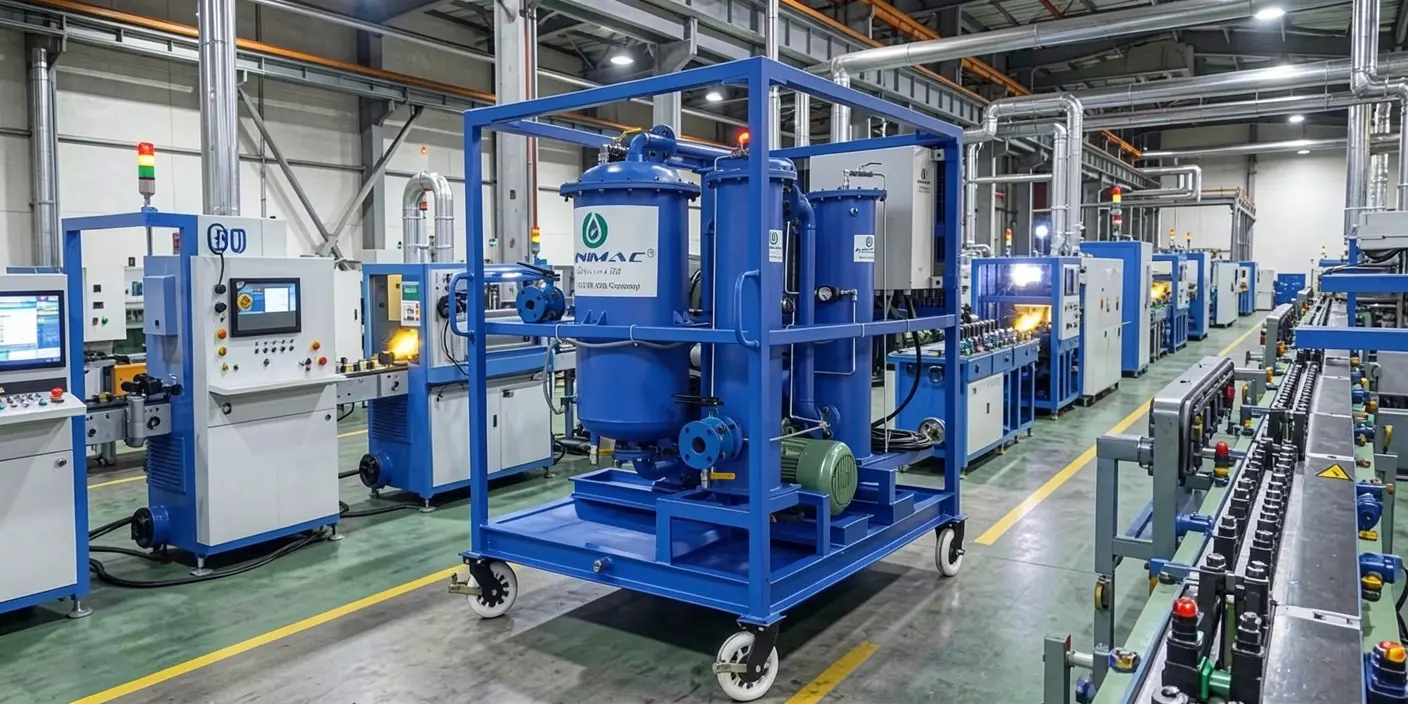
A vacuum dehydration oil purification system removes free, emulsified, and dissolved water from turbine oil, often reducing moisture levels below 100 ppm. By eliminating water, dissolved gases, and fine contaminants, it helps reduce oxidation, minimize varnish formation, extend oil life, improve bearing protection, and lower the risk of costly turbine failures and unplanned shutdowns.
Introduction
In power plants, turbine reliability depends heavily on the condition of the lubricating oil. While operators often focus on mechanical components such as bearings, servo valves, pumps, and hydraulic controls, the oil itself is frequently the hidden factor behind many reliability issues.
Water contamination is one of the most damaging threats to turbine lubrication systems. Moisture can enter oil reservoirs through steam leaks, cooler failures, condensation during shutdown periods, reservoir breathing, or improper storage practices. Although contamination may begin at low levels, its impact grows rapidly over time.
Once water enters the oil, oxidation accelerates, additives deplete faster, corrosion develops, and varnish deposits begin forming. These issues can eventually lead to stuck servo valves, unstable turbine operation, bearing wear, and unexpected downtime.
This is why many power plants now consider vacuum dehydration oil purification systems an essential part of their reliability and contamination control strategy rather than a maintenance accessory.
The Real Impact of Moisture in Turbine Oil
Water contamination affects lubricants in multiple ways simultaneously. Unlike particulate contamination, which is often visible through oil analysis, moisture-related degradation can remain undetected for months while causing progressive damage.
Common consequences of excessive moisture include:
- Reduced lubricant film strength
- Accelerated oxidation
- Additive depletion
- Corrosion of metal surfaces
- Increased sludge formation
- Varnish development
- Servo valve sticking
- Bearing micropitting
- Reduced oil service life
Many turbine operators aim to maintain moisture levels below 100–200 ppm because oxidation rates can increase significantly as water contamination rises.
How Moisture Causes Equipment Problems
[Water Contamination] ──> [Oxidation Accelerates] ──> [Acid Formation] ──> [Sludge & Varnish] ──> [Valve Sticking & Wear] ──> [Reduced Reliability]
What Does a Vacuum Dehydration Oil Purification System Do?
Traditional filtration systems are designed primarily to remove solid particles. While they play an important role in maintaining cleanliness, they cannot effectively remove dissolved or emulsified water from oil.
A vacuum dehydration oil purification system is specifically engineered to eliminate the following:
| Contaminant Type | Removal Capability |
|---|---|
| Free Water | Excellent |
| Emulsified Water | Excellent |
| Dissolved Water | Excellent |
| Entrained Air | Excellent |
| Dissolved Gases | Excellent |
| Fine Particles | Excellent (with filtration stage) |
The system works by lowering pressure inside a vacuum chamber. Under reduced pressure, the boiling point of water decreases significantly, allowing moisture to vaporise at temperatures that are safe for industrial lubricants.
Vacuum Dehydration Process
[Contaminated Oil] ──> [Preheating] ──> [Vacuum Chamber] ──> [Water Evaporation] ──> [Degassing] ──> [Fine Filtration] ──> [Clean, Dry Oil]
Most advanced systems also include multi-stage filtration, temperature controls, online monitoring, and continuous oil conditioning capabilities.
The result is cleaner, drier oil that delivers more consistent lubrication performance across critical equipment.
Improved Turbine and Lubrication System Reliability
Turbines operate under demanding conditions, where bearings, hydraulic controls, and servo valves depend on stable lubricant properties to function correctly.
Even small amounts of moisture can reduce oil film strength and increase the risk of metal-to-metal contact. Over time, this can contribute to bearing wear, increased operating temperatures, and reduced equipment life.
By continuously removing water and gases, vacuum dehydration systems help stabilize lubrication performance throughout the plant.
Reliability Benefits:
| Reliability Area | Benefits |
|---|---|
| Bearing Protection | Reduced wear and micropitting |
| Servo Valves Performance | Improved responsiveness |
| Hydraulic Control Systems | Greater Stability |
| Oxidation Resistance | Slower Oil Degradation |
| Equipment Availability | Reduced Downtime |
| Maintenance Planning | More Predictable Operation |
Many maintenance teams report fewer lubrication-related alarms and improved confidence in condition-based maintenance programmes after implementing continuous oil purification.
Extending Oil Life and Reducing Operating Costs
Replacing turbine oil is expensive. Beyond the cost of the lubricant itself, plants must consider labour, disposal, flushing procedures, and production losses associated with downtime.
Moisture contamination is one of the primary causes of premature oil degradation. As oxidation progresses, acids, sludge, and varnish begin accumulating within the system.
Continuous purification slows this degradation cycle by removing the contaminants that drive oxidation.
Oil Life Extension Flow
[Water Removal] ──> [Reduced Oxidation] ──> [Lower Sludge Formation] ──> [Better Additive Retention] ──> [Longer Oil Service Life]
For large turbine reservoirs, extending oil life by even a few years can generate substantial long-term savings while reducing environmental waste associated with oil disposal.
Reducing Varnish Formation in Turbine Systems
Varnish is one of the most common lubrication-related challenges in modern power plants.
It forms when oxidation by-products become insoluble and begin depositing on critical surfaces. These deposits often accumulate inside servo valves, actuators, bearings, and hydraulic control systems.
Common symptoms of varnish contamination include:
- Slow valve response
- Increased filter plugging
- Temperature instability
- Reduced hydraulic precision
- Unexpected turbine trips
Because moisture accelerates oxidation, controlling water contamination is one of the most effective ways to reduce varnish potential.
A properly designed vacuum dehydration system continuously removes water and dissolved gases before they contribute to severe lubricant degradation.
Why Oil Degassing Matters
While water contamination receives significant attention, dissolved gases and entrained air can also create serious reliability issues.
Air contamination contributes to:
- Foaming
- Oxidation
- Reduced film strength
- Cavitation damage
- Hydraulic instability
The result is improved oil stability, better bearing protection, enhanced hydraulic responsiveness, and more consistent turbine performance. Modern vacuum dehydration systems often include integrated oil degassing technology to eliminate these contaminants.
Critical Applications Across Power Plants
Vacuum dehydration oil purification systems are used throughout power generation facilities to protect critical assets and maintain lubricant quality.
| Application | Primary Function | Best Use Case |
|---|---|---|
| Steam Turbine Lubrication Systems | Moisture Removal | Thermal Power Plants |
| Gas Turbine Oil Systems | Oil Conditioning | Combined-Cycle Plants |
| Hydraulic Control Systems | Water and Gas Removal | Servo Reliability |
| Transformer Oil Systems | Dehydration and Degassing | Electrical Reliability |
| Compressor Lubrication Units | Contamination Control | Rotating Equipment |
| Gearbox Lubrication Circuits | Oil Purification | Auxiliary Systems |
In transformer applications, moisture control is particularly important because water contamination directly reduces dielectric strength and insulation reliability.
Choosing the Right Vacuum Dehydration Oil Purification System
Not all purification systems deliver the same performance in real operating environments.
When evaluating a system, maintenance and reliability teams should consider:
- Water removal efficiency
- Vacuum chamber design
- Degassing capability
- Filtration micron rating
- Flow capacity
- Automation features
- Online operation capability
- Ease of maintenance
- Compatibility with turbine oils
The ideal system should support continuous operation without interrupting production while integrating seamlessly into the plant's overall contamination control programme.
Conclusion
Power plant reliability depends on more than turbines, bearings, and hydraulic systems. The condition of the lubricating oil plays a critical role in protecting equipment and maintaining operational stability.
Moisture contamination accelerates oxidation, promotes varnish formation, increases wear, and shortens lubricant life. Left untreated, it can lead to costly maintenance events and unexpected downtime.
Vacuum dehydration oil purification systems address these challenges by continuously removing free, emulsified, and dissolved water, as well as dissolved gases and fine contaminants. The result is cleaner oil, longer lubricant life, improved equipment protection, and greater operational reliability.
For modern power plants focused on maximizing asset performance and reducing lifecycle costs, vacuum dehydration technology has become a key component of a successful lubrication reliability strategy.
Learn more about our solutions and connect with Minimac Systems on LinkedIn.
About the Author
The Minimac Systems Reliability Team specializes in industrial lubrication management, oil purification technologies, contamination control systems, hydraulic flushing solutions, and condition-based maintenance practices. Drawing on extensive experience across power generation, manufacturing, steel, cement, and process industries, the team helps organizations improve equipment reliability, extend lubricant life, reduce maintenance costs, and achieve long-term operational excellence through advanced oil management solutions.
FAQs
Share this on
 Email
us
Email
us