Exploit the Power of Automatic Oil Condition Monitoring Instruments.
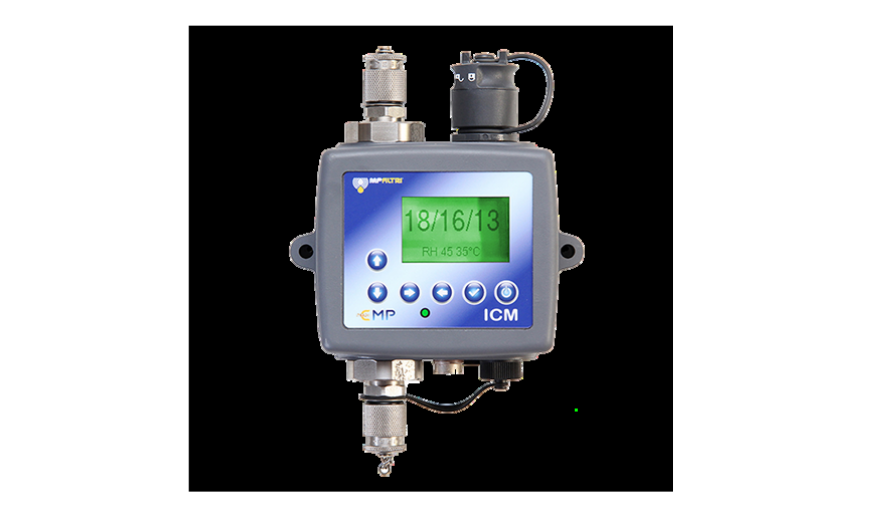
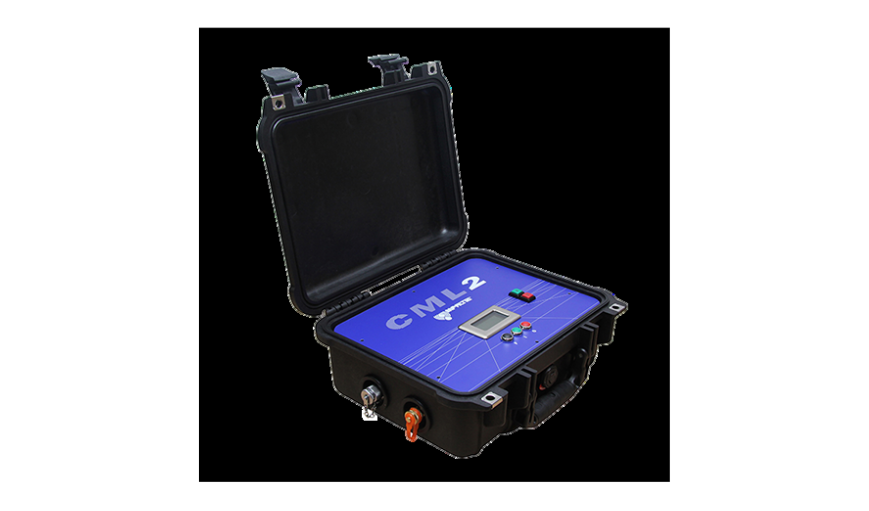
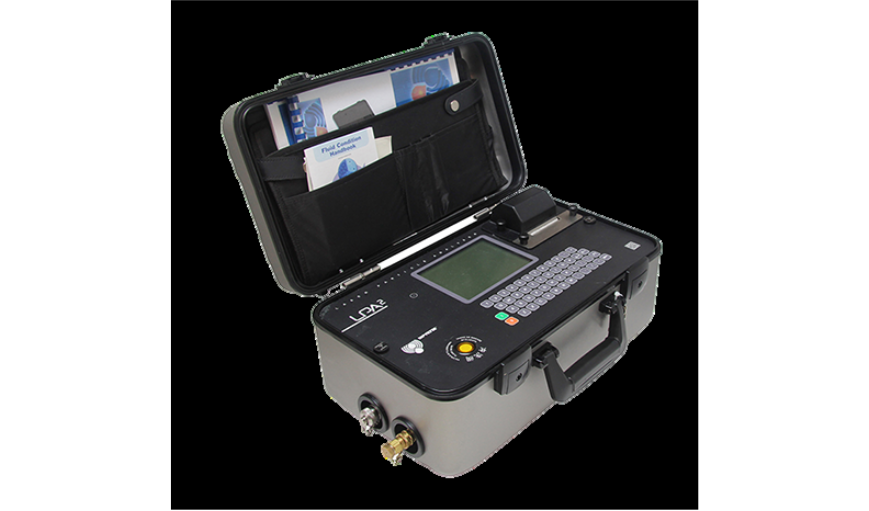
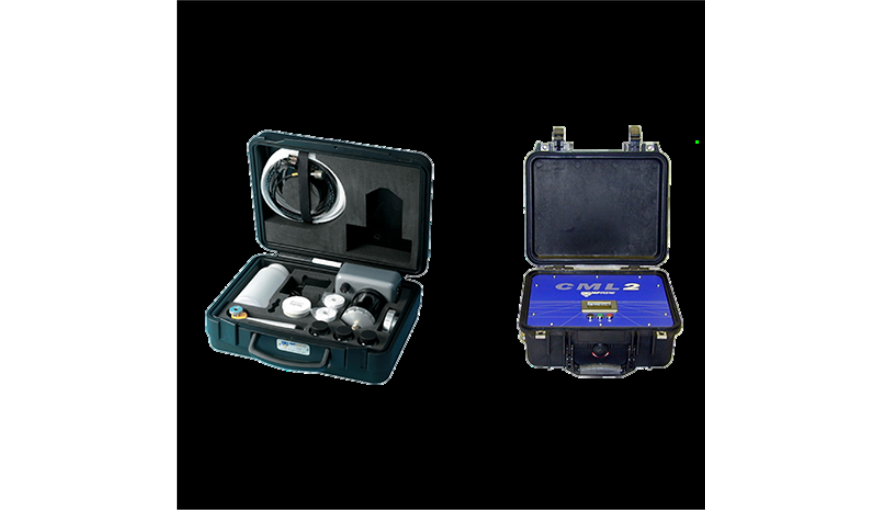
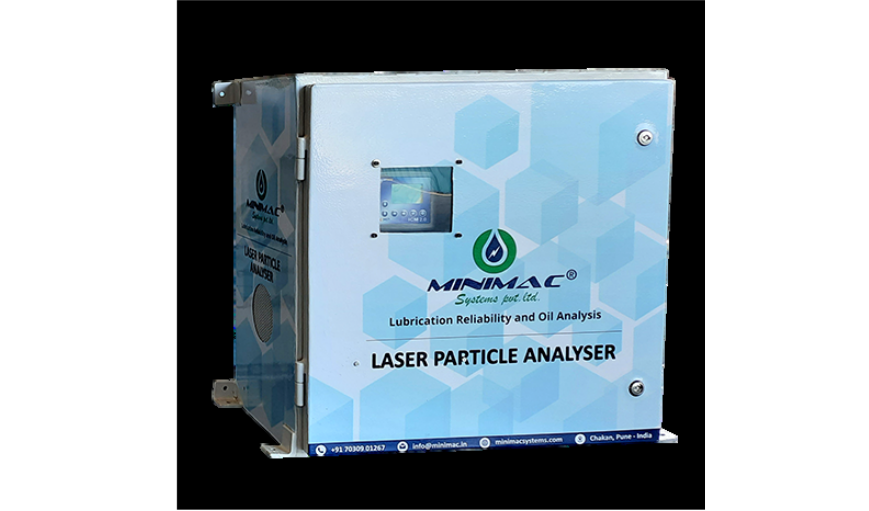
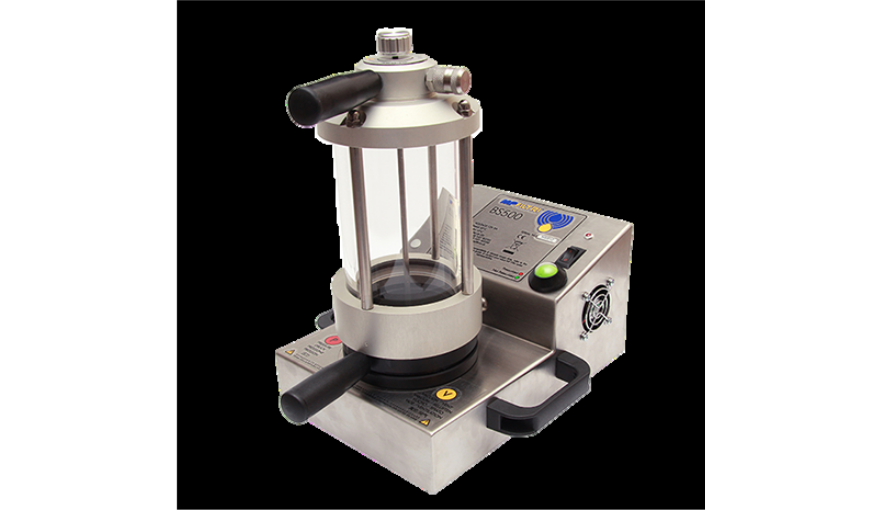
In high-performance industrial environments, accuracy is not optional, it is essential. Automatic Oil Condition Monitoring Instruments are engineered to deliver precise, reliable, and real-time oil analysis with minimal human intervention. These advanced systems are designed for industries where lubrication and hydraulic reliability directly impact operational continuity.
Unlike manual oil testing devices, automatic monitoring systems provide continuous or semi-continuous data, ensuring faster corrective actions and improved predictive maintenance. Where downtime can result in significant financial loss, automated oil analysis systems provide a strategic advantage.
These high-accuracy oil monitoring instruments are tailored for critical lubrication systems, ensuring compliance with international standards and OEM maintenance requirements.
Automatic systems are typically selected when:
 High accuracy requirements are mandatory Lubrication or hydraulic systems are highly critical Real-time reporting of oil parameters is necessary Trend estimation and failure forecasting are required O&M standards demand strict compliance
These instruments support advanced predictive maintenance programs by generating reliable data for analysis and decision-making.
Benefit: Reduces measurement error and ensures dependable results.
Benefit: Enables quick response to protect critical assets.
Benefit: Supports condition-based maintenance strategies.
Benefit: Ensures alignment with global maintenance best practices.
Automatic oil monitoring systems are widely used in:
Oil & Gas (Upstream, Midstream, Downstream) — Continuous contamination monitoring and protection of high-value rotating equipment. Power Generation — Turbine lubrication system monitoring and transformer oil testing with BDV kits. Marine & Offshore — Hydraulic system reliability and engine lubrication quality control. Heavy Manufacturing — Predictive maintenance of hydraulic presses and gearbox and compressor oil health monitoring.Given the harsh environmental conditions and high operational loads, automated oil testing solutions help ensure operational resilience.
Automatic oil condition monitoring instruments are best suited for:
Gas turbines with high operational criticality Transformer oil testing programs Large-scale hydraulic systems Remote oil & gas installations Facilities requiring real-time contamination controlIn these scenarios, manual oil testing devices may not provide the required precision or frequency of monitoring.
Automatic Oil Condition Monitoring Instruments deliver unmatched precision, reliability, and real-time visibility into lubricant health. From online laser particle counters to Karl Fischer titrators and BDV test kits, these advanced systems are designed for industries where accuracy and system criticality cannot be compromised.
For organizations to strengthen predictive maintenance programs and safeguard critical assets, automated oil monitoring solutions provide measurable value.

 Download